
The 8th International Conference on Decision Science & Management (ICDSM 2026)
The emerging field of decision science is an interdisciplinary area that deals with business processes and systems for extracting knowledge from large amounts of data from heterogeneous sources and providing significant insights to support crucial decisions in critical situations. Decision science, as a vast field, utilises a wide range of existing and emerging theories and techniques from diverse disciplines such as business management, information science, mathematics, statistics, and computer science. It adds value to various sectors of business management by the addition of statistical as well as computational techniques to generate valuable insights across the workflow in several business management processes, from the hiring process of new candidates based on various evaluation parameters to helping the senior management in making better decisions in vulnerable situations by keeping them informed about relevant dynamic and uncertain changes occurring in related sectors. Also, data driven logical revelation plays an important role in finding novel directions for advancement and improvement in several key areas such as supply chain management, logistics, business operations, financial markets, marketing strategies, human resource developments, resource management, social sciences, adoption of Internet of things, and distributed computing etc., thus making the integration of decision science techniques in business sector a potential research area
This conference brings together experts, practitioners, scientists, and decision-makers from academia and industry. We aim to foster a strong, lively and well-connected international research community. We welcome innovative ideas, concepts, services, techniques, research outputs and business practices.
For details, please visit ICDSM 2026 website.
For paper submission, please submit your full paper via Easychair system https://easychair.org/conferences/?conf=icdsm2026. For any inquiries, please feel free to contact us at icdsmconference@126.com (registration and paper submission) or bdic@hsu.edu.hk (general inquiries).
Date: 25 April 2026
Time: 09:00 – 18:00
Venue: A401, Fung Yiu King Hall, 4/F, S H Ho Academic Building, HSUHK
Keynote Speakers
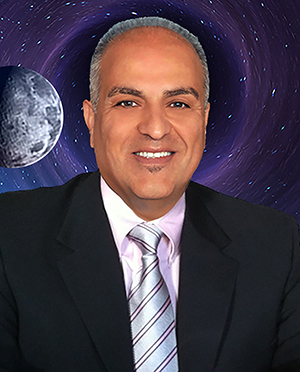
Prof. Madjid Tavana, Ph.D., La Salle University, Philadelphia, United States
Madjid Tavana is a Professor and Distinguished Chair of Business Systems and Analytics at La Salle University. He holds an Honorary Professorship in Business Information Systems and Operations Research at the University of Paderborn and serves on the Scientific Committee of the Doctoral Program in Business and Economics at Sapienza University of Rome. Dr. Tavana is a Distinguished Research Fellow at the Kennedy Space Center, the Johnson Space Center, the Stennis Space Center, the Naval Research Laboratory, and the Air Force Research Laboratory, and has received the prestigious Space Act Award from NASA. He holds an MBA, PMIS, and PhD in Management Information Systems and earned a Post-Doctoral Diploma in Strategic Information Systems from the Wharton School. He has published more than 25 edited books and over 400 research papers in academic journals. Dr. Tavana is the Editor-in-Chief of Decision Analytics Journal (Elsevier), Healthcare Analytics (Elsevier), and Supply Chain Analytics (Elsevier), as well as International Journal of Applied Decision Sciences, International Journal of Management and Decision Making, International Journal of Communication Networks and Distributed Systems, and International Journal of Knowledge Engineering and Data Mining. He is also a Senior Editor at Annals of Operations Research, Computers & Industrial Engineering, Information Sciences, and Journal of Innovation and Knowledge, and serves as an Associate Editor of Expert Systems with Applications, Intelligent Systems with Applications, Journal of Industrial and Production Engineering, and Sustainable Technology and Entrepreneurship. He is the Founding Editor and Editor-in-Chief Emeritus of Space Mission Planning and Operations, International Journal of Strategic Decision Sciences, and International Journal of Enterprise Information Systems. Dr. Tavana has been a Visiting Scholar at the UCLA Anderson School of Management and has held numerous Visiting Professorships worldwide, including in Europe, Asia, and the Americas.
Title: The Art and Science of Business Analytics: A Journey from Data to Action
Abstract: Business analytics is a balanced fusion of art and science, where data-driven methods provide structure while creativity and context give direction and meaning. Effective analytics begins not with data, but with asking the right questions. Problem formulation sets the foundation, requiring curiosity, critical thinking, and the ability to define scope, identify key parameters, and challenge assumptions. The journey from data to action follows a structured yet iterative path from problem formulation to solution design and ultimately to communication, supported by continuous feedback. Once the problem is well defined, the scientific process guides analysis through hypothesis development, decomposition of complex systems, methodological selection, and rigorous model building grounded in evidence and validation. However, even the most sophisticated models fail when they address the wrong problem, underscoring the need to balance analytical rigor with creative insight, where overemphasis on science yields precise answers to irrelevant questions and overemphasis on art produces ideas without empirical support. The analyst therefore operates as an artist, scientist, and communicator, framing meaningful problems, designing robust solutions, and translating insights into actionable narratives. Communication and storytelling transform complex results into clear, compelling messages that inform decision-making. Model development is inherently iterative, driven by experimentation, refinement, and learning. Ultimately, business analytics is not merely about building models, but about driving impact, guiding organizations from data to informed and effective action.

Prof. Sam Kwong, Lingnan University, China
Sam Kwong received his B.Sc. degree from the State University of New York at Buffalo, M.A.Sc. in electrical engineering from the University of Waterloo in Canada, and Ph.D. from Fernuniversität Hagen, Germany. Before joining Lingnan University, he was the Chair Professor at the City University of Hong Kong and a Diagnostic Engineer with Control Data Canada. He was responsible for designing diagnostic software to detect the manufacturing faults of the VLSI chips in the Cyber 430 machine. He later joined Bell-Northern Research as a Member of the Scientific Staff working on the Integrated Services Digital Network (ISDN) project.
Kwong is currently Chair Professor at the Lingnan University of the Department of Computing and Decision Science. He previously served as Department Head and Professor from 2012 to 2018 at the City University of Hong Kong. Prof Kwong joined CityU as a Department of Electronic Engineering lecturer in 1989. Prof. Kwong is the associate editor of leading IEEE transaction journals, including IEEE Transactions on Evolutionary Computation, IEEE Transactions on Industrial Informatics, and IEEE Transactions on Cybernetics. He was the President of IEEE Systems, Man And Cybernetics Society from 2022-23.
Title: AI in Image and Video Processing
Abstract: This presentation will explore the application of artificial intelligence across consumer electronics, image processing, and evolutionary computation, highlighting the speaker’s award-winning contributions. It begins with his 2024 Second Place recognition in the prestigious IEEE Chester W. Sall Memorial Awards for impactful research published in IEEE Transactions on Consumer Electronics. This work leverages AI for COVID-19 screening by automating lung infection segmentation in CT scans—an essential tool that provides critical support to medical professionals. Another key contribution presents the first comprehensive perceptual study and analysis of underwater image enhancement using a large-scale real-world image dataset. In this work, the Underwater Image Enhancement Benchmark (UIEB) was constructed, comprising 950 real-world underwater images, 890 of which have corresponding reference images. The remaining 60 images, for which satisfactory reference images could not be obtained, are treated as challenging data. Utilizing this dataset, a thorough qualitative and quantitative evaluation of state-of-the-art underwater image enhancement algorithms was conducted. This groundbreaking research earned the IEEE Signal Processing Society’s 2025 Best Paper Award for advancing benchmark datasets and novel enhancement techniques. Finally, the presentation will delve into his co-authored paper, “Learning-Aided Evolution for Optimization,” which was honored with the 2026 IEEE Transactions on Evolutionary Computation Outstanding Paper Award.
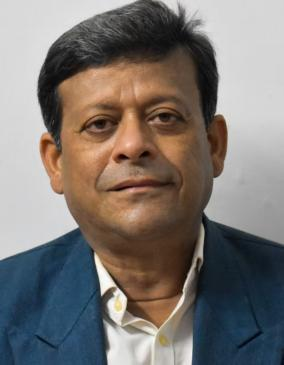
Prof. Ujjwal Maulik, Jadavpur University, India
Dr. Ujjwal Maulik is a Professor in the Dept. of Comp. Sc. and Engg., Jadavpur University since 2004. He was also the former Head of the same Department. Dr. Maulik has worked in many universities and research laboratories around the world as visiting Professor/ Scientist including Los Alamos National Lab., USA in 1997, Univ. of New South Wales, Australia in 1999, Univ. of Texas at Arlington, USA in 2001, Univ. of Maryland at Baltimore County, USA in 2004, Fraunhofer Institute for Autonome Intelligent Systems, St. Augustin, Germany in 2005, Tsinghua Univ., China in 2007, Sapienza Univ., Rome, Italy in 2008, Univ. of Heidelberg, Germany in 2009, German Cancer Research Center (DKFZ), Germany in 2010, 2011 and 2012, Grenoble INP, France in 2010, 2013 and 2016, University of Warsaw in 2013 and 2019, University of Padova, Italy in 2014 and 2016, Corvinus University, Budapest, Hungary in 2015 and 2016, University of Ljubljana, Slovenia in 2015 and 2017, International Center for Theoretical Physics (ICTP), Trieste, Italy in 2014, 2017 and 2018 and Stanford University in 2025. He is the recipient of Alexander von Humboldt Fellowship during 2010, 2011 and 2012 and Senior Associate of ICTP, Italy during 2012-2018 and Fulbright Fellowship in 2024-2025. He is the Fellow of Indian Nationl Science Academy (INSA), Indian National Academy of Engineers (INAE), India, National Academy of Science India (NASI), International Association for Pattern Recognition (IAPR), USA, The Institute of Electrical and Electronics Engineers (IEEE), USA and Asia-Pacific Artificial Intelligence Association (AAIA), Hongkong. He is also the Distinguish Member of the ACM. He is a Distinguish Speaker of IEEE as well as ACM. His research interest include Machine Learning, Pattern Analysis, Data Science, Bioinformatics, Multi-objective Optimization, Social Networking, IoT and Autonomous Car. In these areas he has published ten books, more than four hundred papers, mentoring several start-ups, filed several patents and already guided twenty eight doctoral students and more than hundred master and undergraduate projects. His other interest include mentoring young students, traveling extensively around the globe, outdoor Sports and Music.
Title: Emerging Trends in Artificial Intelligence and Machine Learning for Healthcare Applications
Abstract: In this lecture, first we first understand the fundamental of Artificial Intelligence (AI), and Machine Learning (ML). In this context, we will discuss the advantages of using techniques like Deep Learning (DL), and Explainable AI focusing on healthcare applications. Subsequently we will demonstrate how these techniques are useful for treatment of different diseases specially cancer. We will also discuss how integration of Language models (LM) are useful. Finally, we will conclude by looking towards the future and challenges of AI and ML.

Toni Drescher, CEO, INC Innovation Center Group
Toni Drescher is an experienced engineer and entrepreneur with more than 20 years of experience in implementing technology-driven innovations. In senior management positions, including at Rehau, Hilti, and the Fraunhofer Institute for Production Technology (IPT), he has gained extensive practical expertise. In addition, he has successfully built new companies, developed innovative products and services, and guided their successful market launch. As CEO of the INC Innovation Center Group, his focus lies on the holistic development and implementation of innovations – from the initial idea to market entry. His goal is to unlock growth potential and sustainably strengthen the competitiveness of large companies. Toni Drescher stands for strategic scaling and the successful integration of innovations into entrepreneurial processes.
Title: The Future of Industrial Innovation: Leadership and Strategic Decision-Making in Times of Rapid Change
Abstract: Industrial innovation is entering a new phase shaped by rapid technological advances, artificial intelligence, and increasing global uncertainty. In this environment, competitive advantage depends less on individual technologies and more on the ability of organizations to make strategic decisions under conditions of complexity and accelerating change. This keynote explores how industrial companies can navigate technological disruption and translate emerging technologies into sustainable business impact. It highlights the role of leadership, structured innovation management, and strategic decision-making in guiding organizations through transformation. Drawing on experience from industry and applied research, Toni Drescher outlines how companies can align technology development, business model innovation, and organizational capabilities to remain competitive in rapidly evolving markets. The keynote provides a strategic perspective on the future of industrial innovation and sets the stage for deeper discussions on innovation strategy and implementation.
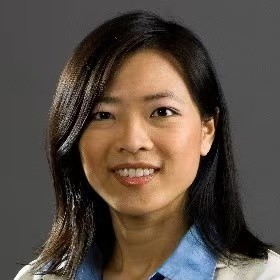
Prof. Dr Pornthipa Ongkunaruk, Kasetsart University, Thailand
Dr Pornthipa Ongkunaruk is a Professor in the Department of Industrial Engineering at Kasetsart University, Thailand. She holds a PhD in Industrial and Systems Engineering from Virginia Polytechnic Institute and State University and has been an active member of the academic community since 2005. Her research interests encompass a broad spectrum of topics within industrial engineering, including supply chain and logistics management, optimization and heuristics, simulation, and computer-based decision support systems. In addition to her research contributions, Dr Ongkunaruk is deeply committed to teaching and mentoring. She has delivered a wide range of courses, such as Industrial Study, Applied Quantitative Sciences, Network Flows Optimization, Seminar, and Supply Chain Management. Through her teaching and scholarly work, she has consistently demonstrated a strong dedication to advancing industrial engineering education and preparing the next generation of professionals in the field.
Title: Smart Supply Chain Decisions: Bridging Theory and Real-World Practice in Thailand
Abstract: In an era of global volatility and increasing complexity, the ability to make robust, data-driven decisions is the cornerstone of supply chain excellence. This talk explores the integration of Decision Science with real-world industrial challenges through the lens of the Thai economy—a key hub for global agriculture and manufacturing. By categorizing supply chain challenges into a three-level decision-making hierarchy—Strategic, Tactical, and Operational—this presentation demonstrates how theoretical models can be transformed into practical, high-impact solutions. First, Strategic Decisions: We discuss long-term network design and sustainability, featuring cases on Multi-Criteria Decision Analysis (AHP) for sustainable crop selection in Northeast Thailand, and mathematical optimization for international warehouse location and biomass factory placement. These cases highlight how strategic modeling can reduce logistics costs by over 60% while ensuring environmental resilience. Second, Tactical Decisions: The focus shifts to medium-term planning under uncertainty. We present lessons from procurement optimization in the aromatic coconut industry using stochastic programming, and (s, S) inventory policies for the perishable food sector. Furthermore, we address supply chain integrity through the integration of IoT technology and root-cause analysis to mitigate temperature abuse in the pet food industry, fostering “win-win” collaborations between suppliers and manufacturers. Third, Operational Decisions: At the execution level, we showcase productivity improvements through line balancing in dairy and frozen chicken manufacturing, cost-efficient vehicle routing with time-window constraints (Bin Packing Problem) for the seasoning industry, and optimal blending models for organic-chemical fertilizers. These applications reveal significant gains in efficiency, ranging from labor and material cost reduction to product conformance. By bridging the gap between academic rigor and industrial reality, this talk provides a comprehensive roadmap for practitioners and researchers to implement “smart” decisions that drive competitiveness and sustainability in emerging markets.
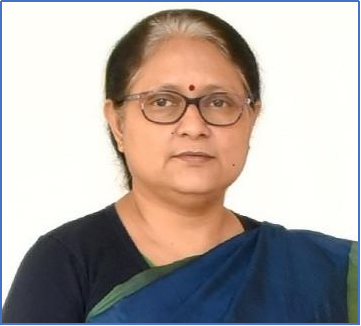
Prof. Sanghamitra Bandyopadhyay, Indian Statistical Institute, India
Prof. Sanghamitra Bandyopadhyay did her B Tech, M Tech and Ph. D. in Computer Science from Calcutta University, IIT Kharagpur and Indian Statistical Institute respectively. She then joined the Indian Statistical Institute as a faculty member, where she is currently a senior Professor. She was the Director of the Institute for the terms 2015-2020 and 2020-2025. Her research interests include computational biology, soft and evolutionary computation, artificial intelligence and machine learning. Prof. Bandyopadhyay has worked in many Institutes and Universities worldwide. She is the recipient of several awards including the Shanti Swarup Bhatnagar Prize in Engineering Science, TWAS Prize, Infosys Prize, JC Bose Fellowship, Swarnajayanti fellowship, INAE Silver Jubilee award, INAE Woman Engineer of the Year award (academia), IIT Kharagpur Distinguished Alumni Award, Humboldt Fellowship from Germany, Senior Associateship of ICTP, Italy, young engineer/scientist awards from INSA, INAE and ISCA, and Dr. Shanker Dayal Sharma Gold Medal and Institute Silver from IIT, Kharagpur, India. She is a Fellow of all the National Science Academies and the Engineering Academy of India, IEEE, The World Academy of Sciences (TWAS), and International Association for Pattern Recognition (IAPR). She serves as a member of the Science, Technology and Innovation Advisory Council of the Prime Minister of India (PM-STIAC). In 2022, she was conferred the Padma Shri award of the Government of India.
Title: Optimizing multiple objectives and multimodality: Techniques and applications
Abstract: Multi-objective optimization problems (MOPs) are those that require simultaneous optimization of multiple conflicting objectives such that improving solutions in terms of one objective leads to deterioration in terms of one or more of the other objectives. The target in MOPs is to arrive at the best trade-off surface, called the Pareto optimal front. Population based metaheuristics find favor in solving MOPs because of their ability to work with multiple solutions at the same time. Multi-modal MOPs (MMMOPs) are those where a many-to-one mapping exists from solution space to objective space. As a result, multiple subsets of the Pareto-optimal set could independently generate the same Pareto-Front. The discovery of such equivalent solutions across different subsets is crucial during decision-making to facilitate the analysis of their non-numeric, domain-specific attributes. In this talk, we will first provide a brief introduction to MOPs followed by demonstrating an application in drug design. The basic concept of multi-modality in MOPs and the crowding illusion problem will be then discussed. A method for solving MMMOPs with a graph Laplacian-based Optimization using Reference vector assisted Decomposition (LORD) will thereafter be described. The talk will conclude with the brief discussion of an application of MMMOPs to the problem of building energy optimization.
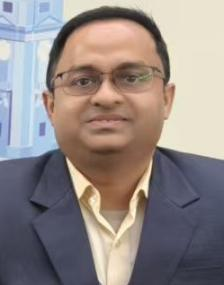
Asso. Prof. Pushpendu Kar, University of Nottingham Ningbo China, China
Dr. Pushpendu Kar is currently an Associate Professor in the School of Computer Science at the University of Nottingham, UK (China campus), where he has also served as an Assistant Professor since 2019. Before this, he was a Postdoctoral Research Fellow at the Norwegian University of Science and Technology (NTNU), the National University of Singapore (NUS), and Nanyang Technological University (NTU), Singapore. He also worked in different engineering colleges as a lecturer and in the IT industry as a software professional. He has over 14 years of experience in teaching and research, as well as 1.5 years of industrial experience at IBM. He has completed all his PhD, Master of Engineering, and Bachelor of Technology in Computer Science and Engineering. He also completed a Postgraduate Certificate in Higher Education (PGCHE) in 2023. He received the prestigious Erasmus Mundus Postdoctoral Fellowship from the European Commission, the ERCIM Alain Bensoussan Fellowship from the European Union, and the SERB OPD Fellowship from the Department of Science and Technology, Government of India. He has received the 2020 IEEE Systems Journal Best Paper Award. He has received eight research grants to support research-based projects, five of which were as a Principal Investigator (PI). He also received many travel grants to attend conferences and doctoral colloquiums. He is the author of over 70 scholarly research papers that have appeared in prestigious journals, conferences, book chapters, and IT magazines. He has also published one authored and three edited books. He holds nine patents. He has organized the ICIoT2024 and ICDSEC2025 conferences with a team. He has also chaired numerous conference committees, collaborated with a team to organize short-term courses, and delivered a few Keynotes and Invited talks at international conferences and institutions. He has also served on the editorial boards of several international journals. He is a Senior Member of IEEE, a Senior Fellow of the Higher Education Academy (SFHEA), UK, a Fellow of the Institution of Electronics & Telecommunication Engineers (FIETE), India, and a Chartered Engineer (CEng) from the Engineering Council, UK. The Ningbo Municipal Government in China has recognised him as a High-Level Talent. His research areas include Ad Hoc Networks, Wireless Sensor Networks, Internet of Things, Content-Centric Networking, Blockchain, BigData, and Quantum Communication.
Title: Blockchain-based Distributed Web Management
Abstract: With the explosive increase of websites, Internet Service Providers (ISPs) have devoted considerable effort and resources to hosting websites for customers. They typically achieve this by setting up central servers to distribute website content over the Internet, allowing end users to access it through web browsers. Nevertheless, this traditional approach raises performance and security issues, making the hosted websites vulnerable to heavy workloads or cyber-attacks. Therefore, this project intends to address this issue using peer-to-peer (P2P) file-sharing networks, which split website content into granules before distributing it to multiple hosting nodes. Additionally, it employs blockchain to store customer data, protecting it from malicious attacks such as SQL injections. With the aid of these strategies, this project implements a distributed web hosting system and compares its performance and security with two commercial hosting platforms: Tencent Cloud and Fleek. The empirical evaluation demonstrates that the system is more robust and secure than the others.